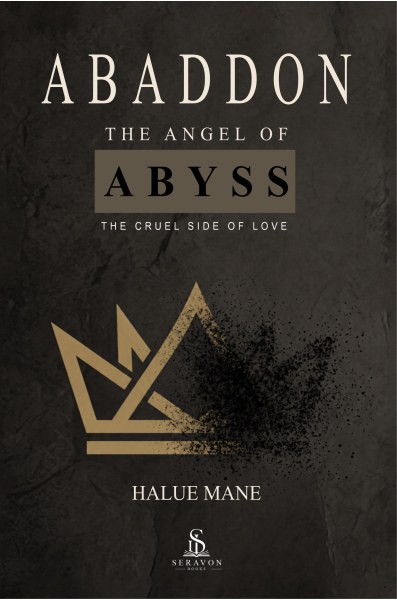
Abaddon - Halue Mane

Abaddon

The Angel of the Abyss — The Cruel Side of Love

Halue Mane

Inglês8.3. Magia
Abaddon, The Angel of the Abyss — The Cruel Side of Love traces Abaddon from the Hebrew root abad through Job, Psalms, Sheol, the Dead Sea Scrolls, and Revelation 9, where he appears as Apollyon. Halue Mane reads destruction as a spiritual function: loss, rupture, and the clearing of what could no longer remain. For readers seeking the meaning of the angel of the abyss, biblical demonology, and sense in endings, loss, and letting go.

USD 4,20

Comprar e ler

Table of contents

  1. Reading Guide
  2. Prologue
  3. Chapter 1 Who is Abaddon
  4. Chapter 2 The Name Abaddon
  5. Chapter 3 Abaddon and Sheol
  6. Chapter 4 Destruction Personified
  7. Chapter 5 Apollyon is Born
  8. Chapter 6 The Great Abyss
  9. Chapter 7 Angel of the Abyss
  10. Chapter 8 The Fifth Trumpet
  11. Chapter 9 Servant or Enemy
  12. Chapter 10 The Absent Fall
  13. Chapter 11 The Rebel Angels
  14. Chapter 12 Abaddon and Satan
  15. Chapter 13 Other Dark Lords
  16. Chapter 14 Other Infernal Worlds
  17. Chapter 15 Abaddon in Christianity
  18. Chapter 16 Abaddon in Esotericism
  19. Chapter 17 Cult and Devotion
  20. Chapter 18 Symbols of the Abyss
  21. Chapter 19 Abaddon and Humans
  22. Chapter 20 The Destructive Power
  23. Chapter 21 Facing the Abyss
  24. Epilogue
  25. Glossary

Excerpt from the book

Chapter 1 Who is Abaddon

Before becoming a name, the term was a guttural sound whispered in the face of the inevitable. The human attempt to give shape to the void produces words that carry the weight of dirt falling onto wood. The Abrahamic tradition, in its vastness of texts, laws, and prophecies, always had to grapple with the problem of absolute finitude. The end of things. The collapse of flesh, the dissolution of memory, and the rotting of the structures that sustain life. For the ancient individual, surrounded by unforgiving deserts and hostile empires, death was not the greatest terror. The true horror was erasure. The complete eradication of being. It is from this primordial fear, from this dry realization about the fragility of matter, that the first root of what we call Abaddon emerges.

The word derives from the Hebrew root אבד (abad), which means to perish, to destroy, to lose oneself, or to wander aimlessly. There is no face in this origin. There are no horns, wings, or malicious intent. The verb points to a physical and ontological condition. A sheep that strays and dies of thirst in the desert is in a state of abad. A harvest devoured by blight or scorched by the violent Middle Eastern sun has suffered abad. The root carries the concreteness…