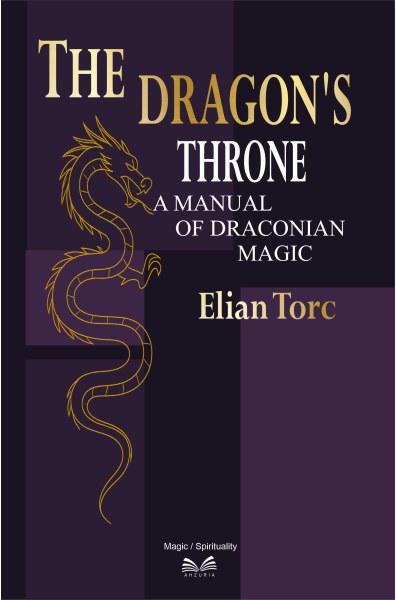
The Dragon’s Throne - Elian Torc

The Dragon’s Throne

A Manual of Draconian Magic

Elian Torc

Inglês8.3. Magia
The Dragon’s Throne is a manual of draconian magic and the dragon path, designed as an initiatory journey of inner transformation. It brings together practices in energetic anatomy, shadow work, alchemy, evocations, advanced protection, astral travel, and the building of astral temples, along with rituals of personal transformation. In 24 chapters, it leads the mage from preparation to the silent oath, through allies, zones of trial, collective circles, and signs of mastery, always with responsibility.

USD 4,20

Comprar e ler

Table of contents

  1. Presentation of the Work
  2. Chapter 1 Preparation for Advancement
  3. Chapter 2 The Journey of the Draconian Mage
  4. Chapter 3 Advanced Energetic Anatomy
  5. Chapter 4 The Dragon’s Shadow
  6. Chapter 5 Portals of Draconian Consciousness
  7. Chapter 6 Complex Draconian Evocations
  8. Chapter 7 Draconian Alchemy
  9. Chapter 8 Work with Lineages and Currents of Power
  10. Chapter 9 Rituals of Personal Transformation
  11. Chapter 10 Advanced Draconian Protection Magic
  12. Chapter 11 Astral and Interplanar Journeys
  13. Chapter 12 The Construction of Astral Temples
  14. Chapter 13 Draconian Guardians and Allies
  15. Chapter 14 Journey to the Draconian Core
  16. Chapter 15 Work in Zones of Trial
  17. Chapter 16 Enchantments and Draconian Sorcery
  18. Chapter 17 The Art of Cursing and Energetic Severance
  19. Chapter 18 Collective Rituals and Draconian Circles
  20. Chapter 19 Draconian Magic and Time
  21. Chapter 20 The Dragon’s Mask
  22. Chapter 21 Magical Testaments
  23. Chapter 22 The Art of Teaching the Dragon’s Path
  24. Chapter 23 Signs of Mastery
  25. Chapter 24 The Silent Oath
  26. Epilogue

Excerpt from the book

Chapter 1Preparation for Advancement

The spiritual path never unfolds as a straight line — continuous, stable, and predictable. It manifests as a spiral that returns, expands, revisits earlier stages, and at the same time reaches new levels of consciousness. This spiral, however, is often misunderstood, especially by those who begin their practices with the expectation of steady growth without pauses or setbacks. It is precisely here that the first great mistake is born: believing that evolution depends solely on the number of steps taken forward. Impatience — that subtle, almost invisible hurry — undermines the process, for it creates the illusion that value lies in the future and not in the present. It makes the practitioner always look to the “next step” as the key, disregarding the richness that has already been lived and experienced.

The pursuit of mastery, however, is not an exercise in speed, but in depth. A single step lived with full awareness and integration may be worth more than dozens taken superficially. Hurry breeds a restless mind, always longing for more, always dissatisfied with what has already been achieved, and this inner state becomes a monumental obstacle on any initiatory path. This is why true progress demands a reflective pause, the ability to look back not with nostalgia, but with reverence and clarity. Such a return…