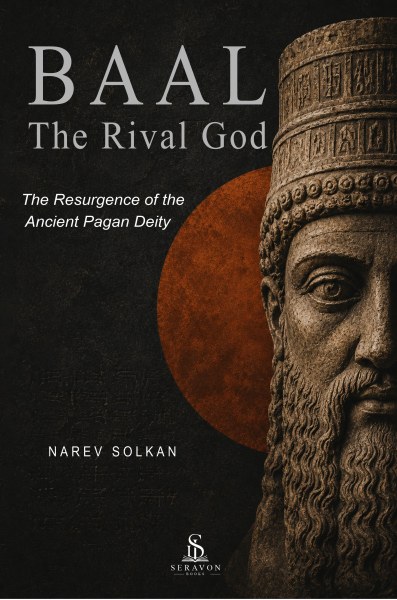
Baal — The Rival God - Narev Solkan

Baal — The Rival God

The Resurgence of the Ancient Pagan God

Narev Solkan

Inglês17.28. Religião Comparada
Baal — The Rival God examines one of the most powerful and misunderstood divine figures of the ancient Near East, moving beyond caricature to explore Baal as storm god, fertility force, political symbol, biblical rival, and transformed memory. Through Canaanite mythology, Ugaritic texts, Israelite prophecy, ritual practice, and later demonization, the book reveals how the struggle between Baal and Yahweh shaped religious identity, monotheism, and the enduring human search for security, power, and meaning.

USD 3,90

Comprar e ler

Table of contents

  1. Reading Guide
  2. Preface
  3. Chapter 1 Baal: The Name That Became a Rival
  4. Chapter 2 The Land That Needed a Lord
  5. Chapter 3 The Cloud Rider Against Death
  6. Chapter 4 Israel's Neighboring God
  7. Chapter 5 When Israel Chose Only One God
  8. Chapter 6 The Many Lords of the Land
  9. Chapter 7 The Prophets' War Against Baal
  10. Chapter 8 The God Who Answers with Fire
  11. Chapter 9 The Scandal of Baal-Peor
  12. Chapter 10 Jezebel and the Altar of Power
  13. Chapter 11 Blood, Smoke, and Rain
  14. Chapter 12 The God Who Made the Earth Live
  15. Chapter 13 The Crown, the Sword, and the Storm
  16. Chapter 14 Baal and the Limit of Necromancy
  17. Chapter 15 The Erasing of Baal
  18. Chapter 16 From Deity to Demon
  19. Chapter 17 The Rediscovery of Baal
  20. Chapter 18 The Rival Constructed by the Bible
  21. Chapter 19 The Memory of the Rival God
  22. Postface
  23. Glossary
  24. Index

Excerpt from the book

Chapter 1 Baal: The Name That Became a Rival

The Sun shows no mercy in the ancient Levant. In the strip of land we now call the Middle East, squeezed between the impossible coolness of the Mediterranean Sea and the suffocating vastness of the Syrian-Arabian desert, human life has always been a gamble against the climate. There was no perennial and docile river like the Nile to flood the banks at the right time, nor the predictable basins of the Tigris and the Euphrates. In the land of Canaan, water came from above. Or it did not come at all. The survival of a family, a tribe, or an entire city-state depended on the rain. When the sky closed like bronze and the soil cracked, forming deep fissures in the clay, the ancient man did not elaborate philosophical theses on suffering. He looked at the static clouds and cried out for an owner. Someone who had authority over the storms. Someone who was the master of that dry land.

It was from agricultural despair and the raw observation of nature that the strength of one of the oldest and most complex words in the Semitic world was born. The consonantal root B-‘-L. In its barest origin, before becoming the center of theological wars and the definitive emblem of idolatry in…